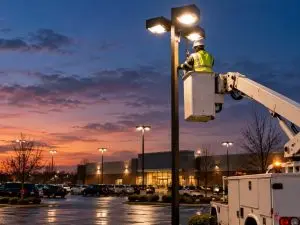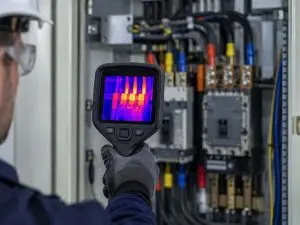
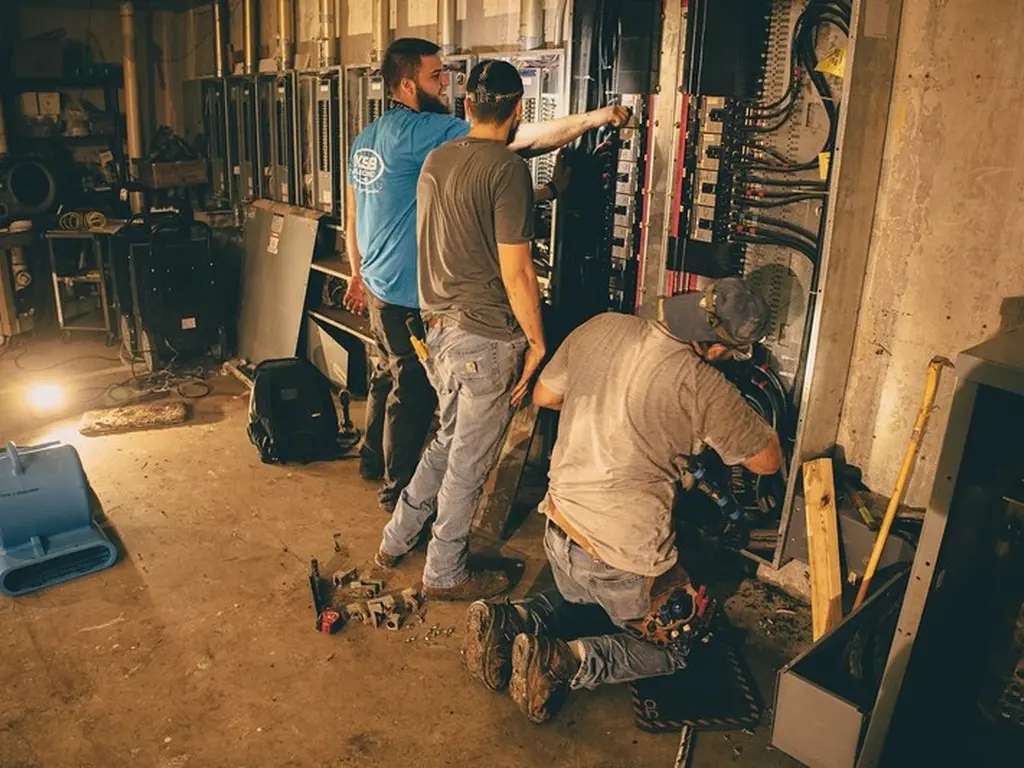
When a nor’easter or an ice storm takes down power lines across Connecticut, a business without backup power goes dark with everyone else. Refrigeration warms up, registers and phones stop, heat and sump pumps quit, and customers go somewhere that is still open.
Commercial generator installation fixes that, but it is not a one day job. A standby generator has to be sized to your loads, tied in through a transfer switch, permitted and inspected. Starting in November gives you the best chance of having a working system before the worst of the winter weather. Our commercial generator installation team in CT handles that full process for Connecticut businesses.
This guide walks business owners and property managers through the decisions in plain language, so you know what to ask before you sign anything.
Quick Answer: What a Commercial Generator Project Involves
| Step | What happens | Why it matters |
|---|---|---|
| Load assessment | An electrician reviews what must run during an outage and your peak demand | Prevents buying a unit that is too small or far too large |
| Generator selection | Size, fuel type, voltage and enclosure are chosen | Matches the building’s service and site conditions |
| Transfer switch | An automatic or manual transfer switch is specified | Moves loads safely between utility and generator power |
| Permits and approvals | Electrical permit through the local building department, plus other approvals if they apply | Required for inspection and safe operation |
| Installation and testing | Pad, wiring, fuel connection, startup and load testing | Confirms the system works before the next outage |
| Maintenance plan | Scheduled exercise, inspection and service | Keeps the generator ready when you need it |
Does Your Business Need a Standby Generator?
Start with one question: what does an outage cost you per hour? For many businesses the answer is lost sales, spoiled stock, frozen pipes, missed deadlines or a security gap. If any of those would hurt, a commercial standby generator is worth pricing.
Businesses that most often put backup power on the list include:
- Restaurants, grocery stores and convenience stores with refrigeration
- Medical and dental offices, and other offices that cannot close for a day
- Gas stations, workshops and light manufacturing
- Property managers responsible for heat, lighting, elevators or sump pumps for tenants
- Businesses that run servers, phones or security systems on site
It also helps to know how the electrical code groups backup power. The National Electrical Code (NFPA 70) separates emergency systems (Article 700), legally required standby systems (Article 701) and optional standby systems (Article 702). Emergency and legally required systems exist because a code or a government agency requires them, usually for life safety. Most businesses that simply want to stay open during an outage are installing an optional standby system. If your building already has code required emergency power, that system has its own rules, so tell your electrician about it early.
How to Size a Commercial Generator
Generator sizing for business comes down to two things: how much power your critical loads use while running, and how much extra they need for a moment when they start.
Generac’s white paper on sizing commercial and industrial generators notes that for existing buildings, peak load levels can be gathered from billing history. It also explains why motors matter: the starting kVA a motor needs to get up to speed plays a significant role in generator sizing, and large starting loads can cause voltage and frequency dips on a generator.
A practical sizing process looks like this:
- List what must run. Heat, refrigeration, lighting, registers, IT, pumps, security, or the whole building.
- Decide between whole building and critical loads only. Backing up selected circuits can mean a smaller generator; whole building backup avoids choosing.
- Review real demand data. Utility bills and, where needed, load readings show actual peaks.
- Account for motor starting. HVAC compressors, walk-in coolers, pumps and other motors need more power to start than to run.
- Check the service. Voltage and phase (for example single phase or three phase) must match the building.
- Allow for growth. If you plan to add equipment, size for it now.
Avoid sizing by guesswork or by matching a neighbor’s unit. An undersized generator can trip or struggle when motors start. An oversized unit costs more up front and may spend much of its life lightly loaded.
What Does Commercial Generator Installation Involve?
Every site is different, but a typical commercial generator installation includes these stages:
- Site visit and placement. We look at where the unit can sit, distances to doors, windows, air intakes and property lines, access for delivery and service, and noise. Manufacturer installation manuals and local rules set the clearances.
- Fuel. Natural gas, propane and diesel each have tradeoffs in storage, runtime and availability. Fuel piping or tank work may involve other licensed trades and approvals.
- Foundation. The generator is set on a pad or base that meets the manufacturer’s requirements.
- Electrical work. Conduit and conductors from the generator to the transfer switch, connection to your distribution equipment, grounding and bonding, and control wiring.
- Startup and testing. The system is started, the transfer switch is tested and the generator is run under load to confirm it carries what it was sized for.
- Handover. You get a walkthrough of how the system operates, what alarms mean and what maintenance it needs.
If your existing electrical service or panel needs work to accept a generator, that is the time to fix it. Our panel upgrades and surge protection service covers those upgrades.
Automatic Transfer Switches Explained
The automatic transfer switch (ATS) is what makes a standby generator hands free. It watches utility power. When power fails, it signals the generator to start and, once the generator is ready, transfers the selected loads to it. When utility power returns and stays stable, it transfers back and the generator cools down and shuts off.
A transfer switch also keeps generator power from feeding back onto utility lines, which protects line crews and your equipment.
Points to settle with your electrician:
- Automatic or manual. Automatic switches need no one on site. Manual switches cost less but someone has to operate them.
- Service entrance rated or not. Some switches can serve as the main disconnect; others install after your existing main.
- Whole building or load managed. Load management can shed or delay big loads so a generator is not overwhelmed.
- Rating. The switch must be rated for the load and for the fault current available at your building.
For life safety systems, NFPA 110 sets performance levels. Its Level 1 systems are installed where failure could result in loss of human life or serious injuries, and Level 2 where failure is less critical to life and safety. NFPA committee documents note the 10 second start time required of energy converters in Level 1 and Level 2 systems (NFPA 110 committee report). An optional standby system for a typical business is not covered by NFPA 110, but the same idea applies: decide in advance which loads come back first.
Permits, Inspections and Maintenance in Connecticut
Codes. Connecticut’s State Building Code history page from the Department of Administrative Services lists the 2022 State Building Code, effective October 1, 2022, as currently in effect, and it adopts the 2020 National Electrical Code (NFPA 70) with Connecticut amendments.
Permits. A generator installation needs an electrical permit from your town’s building department, and the work is inspected. Fees, required documents and review times vary by town and by project, so ask your local building department or let your contractor handle the application. Some projects also need zoning, fire marshal or fuel related approvals.
Licensing. The Connecticut Department of Consumer Protection states that electricians must be licensed to perform electrical work, and that only licensed contractors can obtain permits and sign contracts. Ask any installer for their license number before work begins.
Air permits for larger engines. Connecticut DEEP’s guidance on permitting air emissions from new emergency engines says owners of new emergency engines must obtain a permit if the potential emissions of any individual air pollutant are 15 tons per year or more, and that engines of 100 horsepower and 85 kW or larger typically trigger air permit applicability. Check the engine’s emissions data with the manufacturer and your installer.
Maintenance. A generator that sits for months without running is the one that fails during a storm. Follow the manufacturer’s maintenance schedule, let the unit exercise on its own schedule, and have it inspected before winter. For systems that fall under NFPA 110, NFPA’s published revision record for NFPA 110 describes generator sets in service to be exercised at least once monthly for a minimum of 30 minutes under specified loading (NFPA 110 revision record).
How Long Does Installation Take Before Winter?
There is no single answer. The timeline depends on equipment availability, the size of the unit, fuel work, site preparation and how quickly your town reviews the permit and schedules inspections. On site work is usually the shortest part of the process; ordering equipment and approvals often take longer.
That is why November matters. If you start now:
- The site visit and load assessment can be done before the ground freezes and snow covers the pad location.
- Equipment can be ordered with time to spare.
- Permit review can run while equipment ships.
- You have a chance to test the system before the heaviest winter storm risk.
If you cannot finish before a storm hits, ask about temporary options and about making the building ready for a generator connection now. Our portable and standby generator installation service covers both portable and permanent setups.
Winter Readiness Checklist for Business Owners
- List the equipment that must run during an outage.
- Pull 12 months of utility bills for your electrician.
- Note your service size and any planned equipment additions.
- Choose a fuel type and confirm what is available at your site.
- Book a site assessment and get a written scope.
- Confirm the installer’s Connecticut license and that they will pull the permit.
- Schedule startup, load testing and staff training.
- Put a maintenance plan on the calendar.
Frequently Asked Questions
How much does it cost to install a commercial generator?
It depends on generator size, fuel type, transfer switch, distance from the service, site work, permits and any panel upgrades. A site assessment is the only way to get an accurate number for your building.
Can any electrician install a generator in Connecticut?
Electrical work in Connecticut must be done by electricians licensed by the Department of Consumer Protection, and only licensed contractors can pull permits. Fuel connections may involve other licensed trades.
What is the difference between a commercial standby generator and a portable generator?
A standby generator is permanently installed, connected through a transfer switch and starts automatically. A portable generator has to be set up and connected by hand, and it should only feed a building through an approved transfer switch or interlock, never through an outlet.
Do I need an automatic transfer switch?
If you want backup power without someone on site to switch it, yes. An automatic transfer switch starts the generator and moves loads over on its own when utility power fails.
How often should a commercial generator be serviced?
Follow the manufacturer’s maintenance schedule, let it exercise regularly and book an inspection before winter. Systems covered by NFPA 110 have their own testing requirements.
Can a generator be installed in winter?
Often yes, but frozen ground, snow and storm calls can slow site work. Planning in November gives you more room.
Request a Commercial Generator Assessment
A generator only helps if it starts, carries the right loads and is ready before the storm. KSB Electric installs, repairs and services commercial standby generators for businesses in Bolton, Manchester, Glastonbury, South Windsor, Marlborough and across Connecticut, and our team is available 24/7 for emergencies. If an outage has already hit, call our emergency electrician line.
Call 860-854-3772 or visit our commercial generator installation page to request a commercial generator assessment. For a homeowner’s view of the same process, read our standby generator installation guide for homeowners.