According to ENERGY STAR, lighting accounts for approximately 17% of all electricity consumed in U.S. commercial buildings, making it one of the largest opportunities for energy savings. For many businesses, upgrading outdated lighting is one of the fastest ways to reduce operating expenses while creating a brighter, safer environment.
While the upfront investment can seem significant, modern lighting systems are designed to reduce energy consumption, lower maintenance costs, and improve the overall functionality of commercial spaces.
The Biggest Factors That Affect Your Payback Timeline
The payback period for a commercial lighting upgrade depends on factors beyond installation costs. Your existing lighting system, operating hours, and maintenance expenses all influence how quickly energy savings recover your investment.
1 | Current Lighting Technology
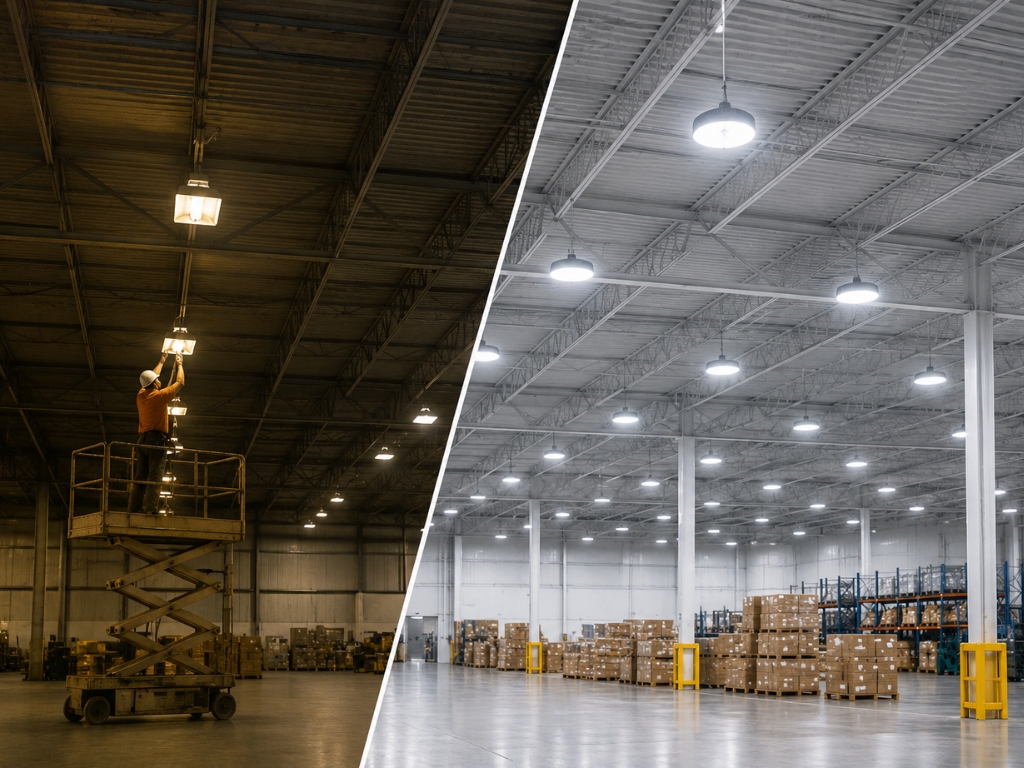
The type of fixtures you’re replacing has one of the biggest impacts on ROI. Older technologies such as metal halide, high-pressure sodium (HPS), fluorescent, and HID fixtures typically consume significantly more electricity than modern LEDs while producing less consistent light.
Some older fixtures also require several minutes to warm up or lose brightness as they age, reducing their overall performance.
Replacing these systems with LEDs often results in substantial reductions in both energy use and maintenance, making the payback period considerably shorter than replacing newer fluorescent fixtures.
2 | Daily Operating Hours
The longer your lights are on each day, the more opportunities there are to save energy. A warehouse operating 18 to 24 hours a day will recover its investment much faster than an office that’s only occupied during standard business hours because the energy savings accumulate every hour the lights are running.
Facilities with multiple shifts, overnight operations, or exterior lighting that stays on from dusk until dawn typically see some of the quickest returns from a commercial lighting upgrade.
3 | Electricity Rates
Energy savings are measured in kilowatt-hours, but the financial savings depend on what your utility charges for that electricity. Businesses in areas with higher electric rates save more money for every kilowatt-hour they eliminate. In addition, some commercial utility plans include demand charges based on peak electricity usage.
Because LED lighting uses less power, an upgrade may help reduce both energy consumption and peak demand, providing savings beyond the monthly usage charge.
4 | Maintenance Costs
Maintenance is often underestimated when calculating ROI. Traditional lighting systems require replacement lamps, ballasts, drivers, lifts, and labor to access high ceilings or hard-to-reach fixtures.
In warehouses, manufacturing plants, and gymnasiums, replacing a single fixture may require renting equipment or temporarily shutting down part of the facility.
LEDs have much longer service lives, reducing replacement frequency and minimizing disruptions to daily operations. These labor and equipment savings can significantly improve the overall return on investment.
5 | Utility Rebates and Tax Incentives
Many utility providers offer rebates based on the number and type of fixtures being upgraded or the amount of energy the project is expected to save. Some municipalities and government programs also provide tax incentives or financing options for energy-efficient improvements.
Applying for these programs before installation can substantially reduce the upfront project cost, shortening the payback period by months or even years, depending on the size of the project.
How to Estimate the Payback Period for Your Building
The payback period for a commercial lighting upgrade is determined by how quickly energy, maintenance, and incentive savings recover the project’s upfront cost. Buildings with inefficient fixtures, long operating hours, high electricity rates, and frequent repair needs generally reach the break-even point sooner.
A simple payback calculation is:
Payback Period = Net Project Cost ÷ Annual Energy + Maintenance Savings
For example, if an upgrade costs $30,000 after rebates and saves $10,000 per year, the estimated payback period is three years.
A more accurate calculation should include fixture wattage, annual operating hours, utility demand charges, maintenance labor, equipment rentals, rebates, and any costs associated with operational downtime.
Where Businesses See the Fastest Return
Certain commercial properties naturally benefit more from lighting upgrades due to their operating schedules and lighting demands.
Warehouses often require high-output lighting for safety and productivity, making energy savings substantial. Manufacturing facilities can reduce operating costs while improving visibility for employees working around equipment. Retail stores benefit from improved product presentation and lower utility bills, while office buildings create more comfortable workspaces with efficient lighting systems.
Parking garages, schools, and healthcare facilities also operate lighting for long hours, making them strong candidates for a commercial lighting upgrade that delivers measurable long-term savings.
Savings Go Beyond Lower Energy Bills
Although energy efficiency is the most obvious advantage, the financial benefits extend well beyond monthly utility costs.
The long-term impact is substantial. According to the U.S. Department of Energy, widespread LED adoption already delivers approximately $14.7 billion in annual energy cost savings across the United States, demonstrating how efficient lighting continues to reduce operating expenses on a large scale.
1 | Reduced Maintenance
LED fixtures have significantly longer lifespans than traditional lighting technologies. Fewer replacements mean lower maintenance expenses, fewer service calls, and less disruption to daily operations.
2 | Better Workplace Visibility
Proper lighting improves visibility throughout a facility, making workspaces more comfortable and helping employees perform tasks safely and efficiently. Well-designed lighting can also reduce shadows and improve overall visual clarity.
3 | Enhanced Customer Experience
Lighting plays a major role in how customers perceive a business. Bright, consistent illumination helps showcase products, creates inviting environments, and contributes to a more professional appearance.
A Commercial Lighting Upgrade Is an Investment, Not Just an Expense
A commercial lighting upgrade delivers value far beyond lower electric bills. Factors such as operating hours, existing lighting technology, maintenance costs, electricity rates, and available incentives all influence how quickly the investment pays for itself.
While every facility has a unique timeline, businesses often continue enjoying meaningful savings for many years after reaching their payback point.
KSB Electric can evaluate your facility’s existing lighting, identify opportunities for improvement, and recommend an efficient upgrade based on your operational needs and budget. Contact us to schedule a professional lighting assessment and find out how quickly your investment could start paying off.