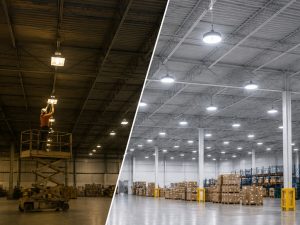
Working at height can make routine maintenance more challenging. Ladders often require frequent repositioning, while scaffolding takes time to set up. A bucket truck service provides a practical alternative by giving trained operators direct access to elevated work areas.
Safety is also a major concern. In 2023, falls, slips, and trips caused 421 construction fatalities, accounting for 39.2% of all construction fatalities in the U.S.
When properly selected and operated, bucket trucks can make many elevated jobs safer and more efficient. Here are 10 common applications.
1. Tree Trimming and Pruning
Tree trimming involves removing dead, damaged, overgrown, or hazardous branches to maintain trees and provide clearance around structures. The work becomes more difficult when branches are high above the ground or extend over roofs, fences, and parking areas.
A bucket truck service gives qualified workers controlled access to specific parts of the tree without repeatedly climbing and repositioning ladders. For suitable trees and sites, it can also be more efficient than climbing methods because workers can reposition the boom as the job progresses. Extra precautions are required around electrical lines.
2. Parking Lot and Streetlight Maintenance
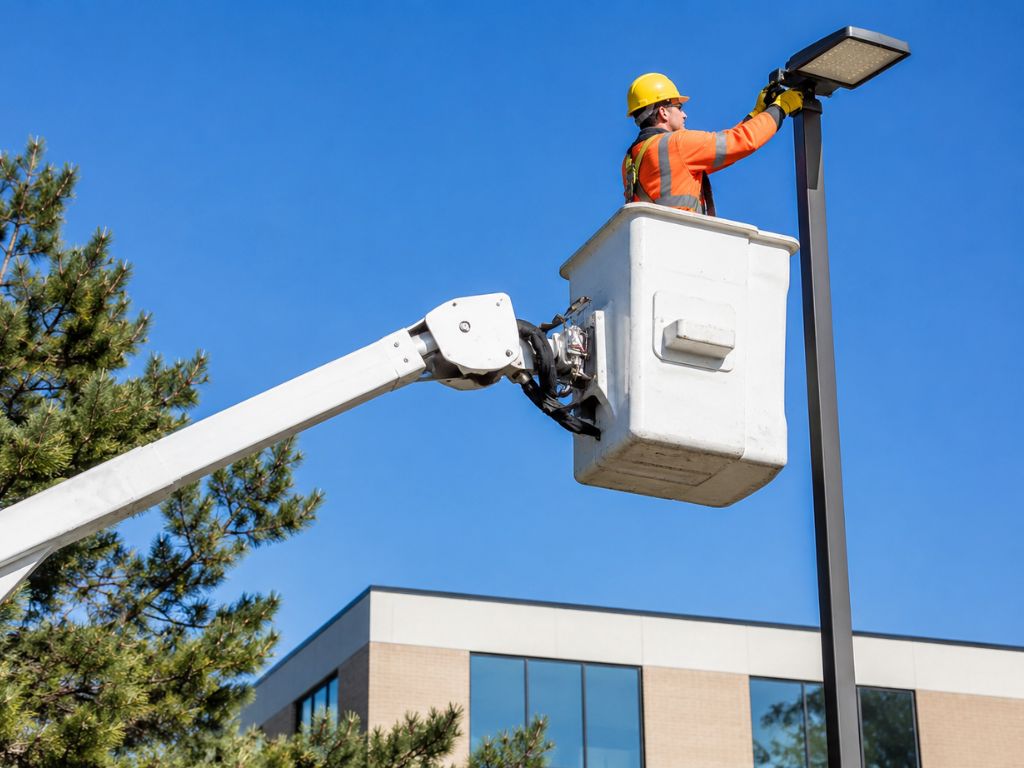
Parking lot and streetlight maintenance can include replacing fixtures, troubleshooting electrical problems, inspecting components, and repairing damaged equipment. Because these lights are mounted on tall poles, technicians need reliable elevated access.
Bucket trucks allow technicians to raise themselves, their tools, and necessary components directly to the fixture. Compared with repeatedly setting up ladders or other temporary access equipment, the truck can move efficiently between multiple poles, making it well suited for shopping centers, campuses, commercial properties, and municipalities.
3. Commercial Sign Installation and Repair
Commercial sign work may involve installing new signs, replacing lighting, repairing electrical components, cleaning sign faces, or securing damaged sections. Large storefront and pole-mounted signs can be difficult to reach safely from the ground.
A bucket truck provides an elevated platform that can be positioned close to the sign while keeping tools within reach. Unlike ladders, which provide limited working space and require frequent repositioning, a bucket truck gives technicians greater flexibility when working across different sections of a sign.
4. Utility and Telecommunications Work
Utility and telecommunications jobs often require technicians to install, inspect, repair, or maintain equipment mounted on poles. This can include cables, communication lines, electrical components, and other overhead infrastructure.
Bucket trucks allow qualified technicians to reach these components without climbing poles or relying on ladders. The boom can also be repositioned as work moves between different areas. Because electrical hazards may be present, the equipment and work practices must meet the requirements of the specific job.
5. Building Exterior Inspections
Exterior inspections help identify damaged siding, flashing, windows, joints, vents, roof edges, and other building components that may need attention. Some problems are difficult to evaluate accurately from ground level.
A bucket truck can position an inspector close to the area so they can examine damage and take photos. Compared with installing scaffolding for a relatively short inspection, bucket truck access can require less setup and make it easier to examine several locations around a building.
6. Gutter and Roofline Maintenance
Gutter and roofline work includes cleaning debris, checking drainage, inspecting damage, and performing localized repairs. Long or tall buildings can make these tasks especially time-consuming when workers rely on ladders.
A bucket truck service can reach multiple sections of a roofline from suitable setup locations, reducing repeated climbing and ladder repositioning. It can also be more practical than scaffolding for smaller maintenance projects that do not require continuous access along the entire building.
7. Security Camera Installation and Maintenance
Security camera work involves mounting cameras, running or accessing wiring, adjusting viewing angles, replacing equipment, and troubleshooting existing systems. Cameras are often installed high on walls, poles, and parking structures to provide better coverage.
Bucket trucks give technicians an elevated workspace where they can access the camera and keep necessary tools nearby. Compared with ladders, the platform provides more working room and can be repositioned to service multiple cameras across a large property.
8. Holiday Lights and Seasonal Decorations
Commercial holiday decorating may involve installing lights, banners, wreaths, and other displays on buildings, poles, and trees. Crews often need to reach many attachment points at different heights.
Using ladders can mean repeatedly climbing, descending, and relocating equipment. A bucket truck allows workers to move between elevated areas more efficiently and carry installation materials with them. This advantage also applies when decorations need to be removed at the end of the season.
9. Exterior Painting and Building Maintenance
Exterior maintenance can include painting, sealing joints, replacing small components, and completing localized repairs on elevated portions of a building. Access can become a major part of the project when only a few high areas require work.
For these targeted jobs, a bucket truck can be faster to position than erecting extensive scaffolding. It also offers greater mobility than a stationary ladder. Scaffolding may still be the better choice for large projects requiring continuous access to an entire facade.
10. Storm Damage Inspection and Cleanup
Storm cleanup can involve inspecting damaged lights, signs, trees, and exterior building components, as well as removing or securing materials that present a hazard. Many of these problems occur well above ground level.
A bucket truck service gives qualified crews direct access to elevated damage without depending solely on ladders or climbing. Its mobility can also help crews inspect several affected areas efficiently. However, storm-damaged sites may contain unstable ground, electrical hazards, debris, and weakened structures, so a thorough site assessment is essential before work begins.
What Makes a Bucket Truck Service Safer?
A bucket truck is only as effective as the planning and people behind it. Before work begins, the crew should evaluate the site, inspect the equipment, identify overhead hazards, and confirm that the truck is appropriate for the project.
Operator training is equally important. Proper fall protection and equipment procedures should be followed throughout the job.
Working height is not the only consideration when selecting equipment. Horizontal reach, load capacity, ground conditions, overhead obstructions, truck dimensions, and electrical hazards can all influence which bucket truck is suitable.
Get Reliable Bucket Truck Service From KSB Electric
Need safe, efficient access to hard-to-reach areas? KSB Electric provides professional bucket truck service for elevated electrical and maintenance projects. Our team uses the right equipment and careful planning to get the job done efficiently.
Contact KSB Electric today to discuss your bucket truck service needs and request a quote.